


How to choose frozen vegetables?
Release time:
2020-05-29
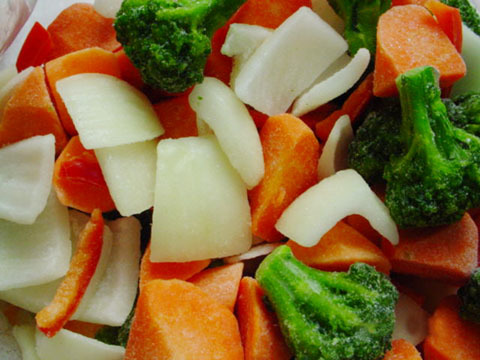
As living standards improve, frozen foods have increasingly become a part of everyday life for ordinary people. Quick-frozen aquatic products, quick-frozen meat and poultry, various quick-frozen vegetables, and quick-frozen ready-to-eat meals are no longer unfamiliar to most people. However, many still harbor considerable doubts about the hygienic quality and nutritional value of these foods. First, we should distinguish between three concepts: frozen foods, quick-frozen foods, and generally frozen foods.
As living standards improve, frozen foods have increasingly become a part of everyday life for ordinary people. Quick-frozen aquatic products, quick-frozen meat and poultry, various quick-frozen vegetables, and quick-frozen prepared foods are no longer unfamiliar to most people. However, many still harbor considerable doubts about the hygienic conditions and nutritional value of these foods.
First, we should distinguish among three concepts: frozen foods, quick-frozen foods, and generally frozen foods. According to the “Technical Regulations for Quick-Frozen Foods” approved by China in 1988, foods frozen at temperatures below -30℃ are classified as quick-frozen foods, whereas foods frozen at temperatures between -18℃ and -23℃ are referred to as frozen foods. Generally speaking, ice crystals formed during the freezing process are the primary factor affecting the quality of frozen foods. Both frozen foods and quick-frozen foods are pre-processed foods that are rapidly passed through the temperature range of -1℃ to -5℃—the zone where ice crystals grow most extensively—within 30 minutes, and then stored and transported at temperatures below -18℃. Because frozen foods and quick-frozen foods share many similarities, they are often collectively referred to as “quick-frozen foods.”
Frozen foods must meet the following conditions:
1. Fresh food undergoes preliminary processing to meet food hygiene standards;
2. Freeze using a quick-freezing method;
3. Equipped with packaging and labels that meet the required standards. These requirements are precisely what distinguish quick-frozen foods from generally frozen foods.
Frozen foods retain their nutritional value.
Simply put, quick-frozen foods undergo a freezing process in an environment ranging from minus 30 to minus 35 degrees Celsius within about 15 minutes, bringing the frozen food down to a temperature of minus 18 degrees Celsius.
In real life, the foods we commonly see processed using cold storage facilities or refrigerators often take as long as 90 minutes to freeze—these are referred to as slow-frozen foods.
The difference between quick-frozen foods and slow-frozen foods lies in the fact that the cells of quick-frozen foods are less likely to deform, and the moisture and juices within the food tissues remain intact. Quick-freezing prevents the decline in food quality that typically occurs during the prolonged freezing process of slow-frozen foods.
The production, processing, transportation, and sales of quick-frozen foods have strict temperature requirements and must be carried out at or below minus 18 degrees Celsius. This is because only at temperatures below minus 18 degrees Celsius can bacteria and various enzymes be completely inhibited, thereby preventing food spoilage and preserving the food’s original freshness and nutritional content without any loss.
Nutrition experts believe that, aside from preserving the flavor of traditional snacks, frozen foods currently represent the best option for maintaining nutritional value. Compared with other food preservation methods, frozen foods not only keep protein and fat content unchanged but also retain essential trace elements, macronutrients, and vitamins.
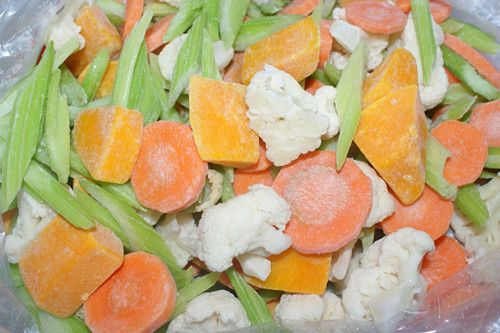
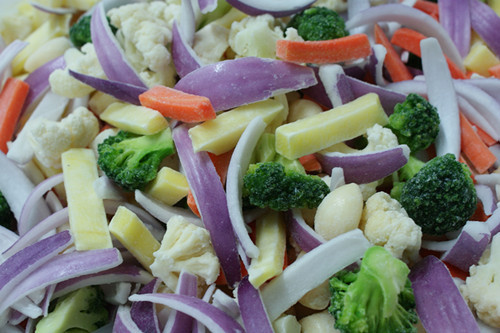
So, what should we pay attention to when selecting and consuming quick-frozen foods? When choosing quick-frozen foods, you should select products with standardized packaging and complete labeling; choose products that have a naturally bright white color, without discoloration or dullness; and select products with clear labels indicating the expiration date and production date.
Related News

Address: No. 11926, North Ring Road, Shouguang City, Shandong Province
Phone: +86-536-5117168
Mobile/WA: +86-15964038663
Email: yilongfood@126.com

Add WeChat for consultation.

Mobile website
Copyright © Shouguang Yilong Food Co., Ltd.